US Shoppers Spent Billions While Seeking Black Friday Deals
US Shoppers Spent Billions While Seeking Black Friday Deals
US shoppers spent billions of dollars during Black Friday while searching for discounts across a broad range of products. The trend shows that strong consumer demand can coexist with careful price comparison. Shoppers evaluated prices, promotions, availability, shipping, rewards, and return policies across multiple retailers and channels.
Black Friday remains one of the largest shopping events of the US holiday season. It follows Thanksgiving and leads into Cyber Monday, creating a concentrated period in which retailers compete for gift purchases, household spending, and discretionary demand. The available reporting describes consumers preparing for both events but does not provide a verified total, detailed sales figures, or category-level rankings.
Black Friday Concentrated Holiday Demand
Black Friday creates a short promotional window that encourages consumers to shop quickly. Retailers use the event to attract holiday purchases, household upgrades, personal spending, and seasonal gift demand.
Consumers may shop for presents, replacement electronics, appliances, or discounted household products. Limited-time promotions and restricted inventory can create urgency, but many shoppers still enter the weekend with lists, budgets, and preferred products. Others begin with a specific purchase and expand their baskets after finding related promotions.
Black Friday and Cyber Monday Form a Connected Cycle
Black Friday traditionally combines physical-store promotions with online offers. Cyber Monday is more closely associated with digital shopping, although the distinction has become less rigid as retailers extend promotions across the full weekend.
Shoppers may divide purchases between the two events because retailers release different offers on different days. A consumer might buy an appliance in a store on Black Friday and compare online prices for clothing, software, or accessories during Cyber Monday.
The extended shopping cycle gives consumers more time to compare prices and delivery options. It also allows retailers to distribute demand, promote different products, and adjust offers according to inventory.
High Spending Did Not Eliminate Price Sensitivity
Billions of dollars in Black Friday spending indicate substantial purchasing activity, but they do not show that consumers stopped caring about prices. Total spending can rise because of more transactions, higher-priced products, larger baskets, or a combination of factors.
A large spending total does not reveal the average order value or the depth of discounts. Consumers can spend heavily while remaining highly price-sensitive by waiting for promotions, comparing competing offers, applying coupons, using loyalty rewards, and choosing retailers with free shipping.
Common factors in Black Friday decisions included:
- Advertised discounts.
- Price-comparison results.
- Promotional codes.
- Free or reduced-cost shipping.
- Flexible returns.
- Loyalty points.
- Membership benefits.
- Product availability.
- Pickup convenience.
The final value depends on more than the percentage shown in an advertisement. A product with a smaller discount may cost less at checkout if it includes free delivery, requires no membership, or carries fewer additional fees.
Shoppers Searched Across Many Product Categories
Electronics and Technology
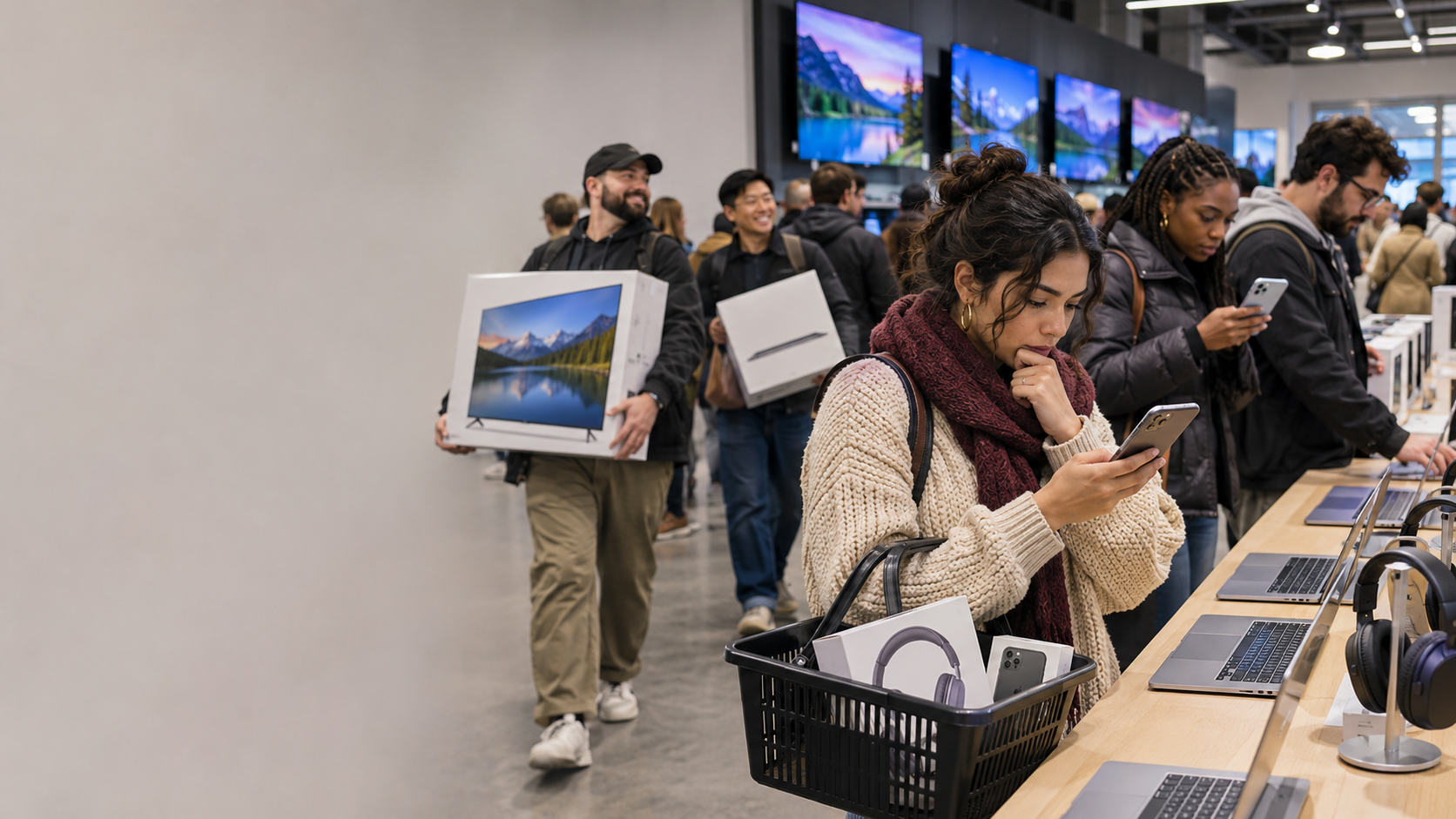
Electronics often attract attention during Black Friday because prices are easy to compare and the products are common holiday gifts. Representative categories include televisions, laptops, tablets, smartphones, headphones, smart-home devices, gaming consoles, and computer accessories.
These examples describe common Black Friday categories, not confirmed top-selling products in the supplied reports. Consumers should compare exact model numbers, technical specifications, warranties, and included accessories. A large percentage-off claim also requires context because retailer-exclusive models may differ from standard products.
Home and Kitchen Products
Promotions often extend to appliances, furniture, bedding, kitchen equipment, cleaning devices, and home-improvement products. Because these purchases can be expensive, shoppers should check delivery charges, installation fees, product dimensions, warranty coverage, return conditions, and replacement-part availability.
Apparel, Beauty, and Personal Goods
Clothing, footwear, cosmetics, skincare, luggage, and other personal goods add variety to the Black Friday market. Retailers may use storewide discounts, clearance prices, gift sets, loyalty promotions, and buy-one-get-one offers.
The lowest listed price may not produce the lowest final cost if shipping charges, exclusions, or membership requirements apply. Return conditions also matter, particularly for apparel with uncertain sizing and beauty products that cannot be returned after opening.
Toys, Gifts, and Seasonal Products
Black Friday allows consumers to complete gift lists before December deadlines. Availability becomes especially important for popular toys, games, electronics, and seasonal merchandise. Buyers should confirm age suitability, stock status, delivery timelines, gift-return policies, and packaging conditions.
Why Consumers Compared Multiple Retailers
Online shopping lets consumers compare prices, specifications, reviews, delivery dates, and retailer policies without traveling between stores. Search engines, retailer apps, price trackers, email alerts, and browser tools can make the process faster.
Retailers competed through more than discounts. Common incentives included:
- Free shipping.
- Same-day or next-day pickup.
- Price matching.
- Loyalty rewards.
- Exclusive bundles.
- Membership benefits.
- Flexible payment options.
- Extended return periods.
The lowest advertised item price may not be the lowest total cost. Shoppers should compare taxes, shipping, service fees, membership charges, accessories, and financing costs. They should also identify what each bundle contains before comparing offers.
Trust and convenience influenced decisions as well. Consumers may prefer a retailer with reliable delivery estimates, clear stock information, secure payment processing, responsive customer service, and a transparent return policy. Marketplace shoppers should verify third-party sellers, seller ratings, warranty coverage, product authenticity, and return eligibility.
Retailer Strategies Increased Urgency
Retailers commonly used limited-time sales, countdowns, doorbuster offers, early-access events, and limited-inventory messages to encourage faster decisions. These tactics can highlight genuine bargains but may reduce the time available for research.
Shoppers should check whether a discount reflects a meaningful price reduction, compare the product with its normal price, verify the model number, read the terms, and calculate the complete purchase cost.
Many retailers began promotions before Black Friday and continued them through Cyber Monday. Offers could vary by store, website, mobile app, email campaign, or marketplace. A discount might require an app or membership, apply only in stores, or exclude pickup orders.
How to Find Better Black Friday Value
A practical shopping plan should include:
- A priority list.
- A maximum budget.
- Acceptable alternative products.
- Gift deadlines.
- A record of normal prices.
Before purchasing, consumers should compare identical model numbers and calculate the full cost, including taxes, shipping, installation, membership fees, accessories, financing charges, and service plans.
They should also review product specifications, independent reviews, warranty terms, return windows, restocking fees, manufacturer support, and seller ratings. Stock status and delivery dates matter when purchases are needed before a holiday deadline.
Consumers should use secure websites, verify retailer URLs, avoid unfamiliar payment links, save order confirmations, and review bank or credit-card statements after major shopping events. Urgency should not replace verification.
What Black Friday Spending Could Mean for Cyber Monday
Consumers who did not find suitable Black Friday offers may continue searching on Cyber Monday. New promotions, online-only discounts, changing inventory, price adjustments, and different product availability can influence purchasing decisions.
Retailers may adjust offers according to inventory, traffic, demand, competitor pricing, and delivery capacity. A popular product may sell out before a lower price appears, while slower-moving merchandise may receive deeper discounts later. Shoppers must balance waiting against the risk of losing availability.
Reporting Limits
The supplied sources describe billions in spending and broad deal searches, but they do not provide a verified spending total, year-over-year comparison, retailer-level results, product rankings, or an online-versus-in-store breakdown. Sources 3, 5, 7, and 9 appear to describe substantially similar reporting and should not be treated as independent confirmation of separate spending totals.
The relevant source summaries include coverage from Al Jazeera, the Richmond Register, Chronicle Online, couriernews.com, and the Gwinnett Daily Post:
Conclusion
US shoppers spent billions during Black Friday while searching across a wide range of deals. High consumer spending and price sensitivity can occur at the same time. Gift demand, product variety, retailer competition, online comparison, and limited-time promotions all shaped the shopping environment.
The best purchase is not always the one with the largest advertised discount. Final cost, product quality, delivery timing, warranty coverage, and return terms determine practical value. Shoppers should research normal prices, compare total costs, verify retailer policies, and prioritize planned purchases over promotional urgency.
Frequently Asked Questions
How much did US shoppers spend on Black Friday?
The supplied summaries state that shoppers spent billions of dollars but do not provide a verified total. A precise figure requires original reporting or a clearly identified retail-sales data provider.
What products did shoppers search for?
Shoppers searched across categories that may include electronics, home goods, apparel, beauty products, toys, and gifts. The supplied summaries do not identify definitive top-selling categories.
Why did shoppers compare multiple retailers?
Consumers compared retailers to find lower total prices, better shipping terms, stronger return policies, product availability, rewards, and convenient pickup options.
Is Black Friday better than Cyber Monday?
Neither event is consistently better for every category. Black Friday may offer strong store and online promotions, while Cyber Monday may provide additional digital discounts. Price, inventory, shipping, and retailer policies determine the better option.
How can shoppers avoid misleading discounts?
Shoppers should research normal prices, compare identical model numbers, calculate the full checkout cost, review exclusions, and check return and warranty policies. They should not purchase solely because a promotion creates urgency.
Related Articles
-
 Black Friday Sales Rose Despite Affordability Concerns
-
 GoodRx Settlement Claim Deadline: How to File
-
 Questions Over Trump’s Role in Nvidia Reinstatement
-
 Why American Companies Are Pulling Back From China
-
 What the Debate Over Aschenbrenner’s Letter Reveals
-
 Warnings Behind This Week’s Stock-Market Rally
-
 December 2025 Social Security Payment Schedule
-
 Airport Travel Advice: Prepare for Delays and Disruptions
-
 United Fidelity Bank Closed: What Customers Should Know
-
 WLFI Token Plunges More Than 50% Overnight
-
 Jensen Huang, Nvidia and Trump: A Governance Test
-
 Jensen Huang Return to Nvidia: What the Reports Claim
-
 Why Black Friday Shoppers Still Spend Big on Tech
-
 United Fidelity Bank Seizure: What Customers Should Know
-
 DWP Cyber Attack Takes Pension and Benefits Systems Offline
-
 Nvidia Blackwell Hardware Reported at China Data Center