Jensen Huang, Nvidia and Trump: A Governance Test
Jensen Huang, Nvidia and Trump: A Governance Test
Jensen Huang’s reported appearance before Congress has placed Nvidia’s leadership, government relations and political contributions under intense scrutiny. The controversy involves three connected developments: President Donald Trump’s reported claim that he persuaded Nvidia’s board to restore Huang, a reported $25 million Nvidia contribution to Trump’s ballroom project, and concerns about succession planning after Huang was absent for 11 days.
The available reports do not establish the complete timeline, the formal status of Huang’s position or the precise mechanism through which Trump allegedly influenced Nvidia’s board. They also do not prove that the ballroom contribution was connected to Huang’s return. A presidential statement, a corporate donation and a leadership decision are separate facts unless evidence demonstrates a direct relationship.
The episode raises a broader question: can a strategically important technology company maintain independent corporate governance when its chief executive is central to national artificial intelligence policy, export controls and political negotiations?
What Trump Reportedly Said About Huang’s Return
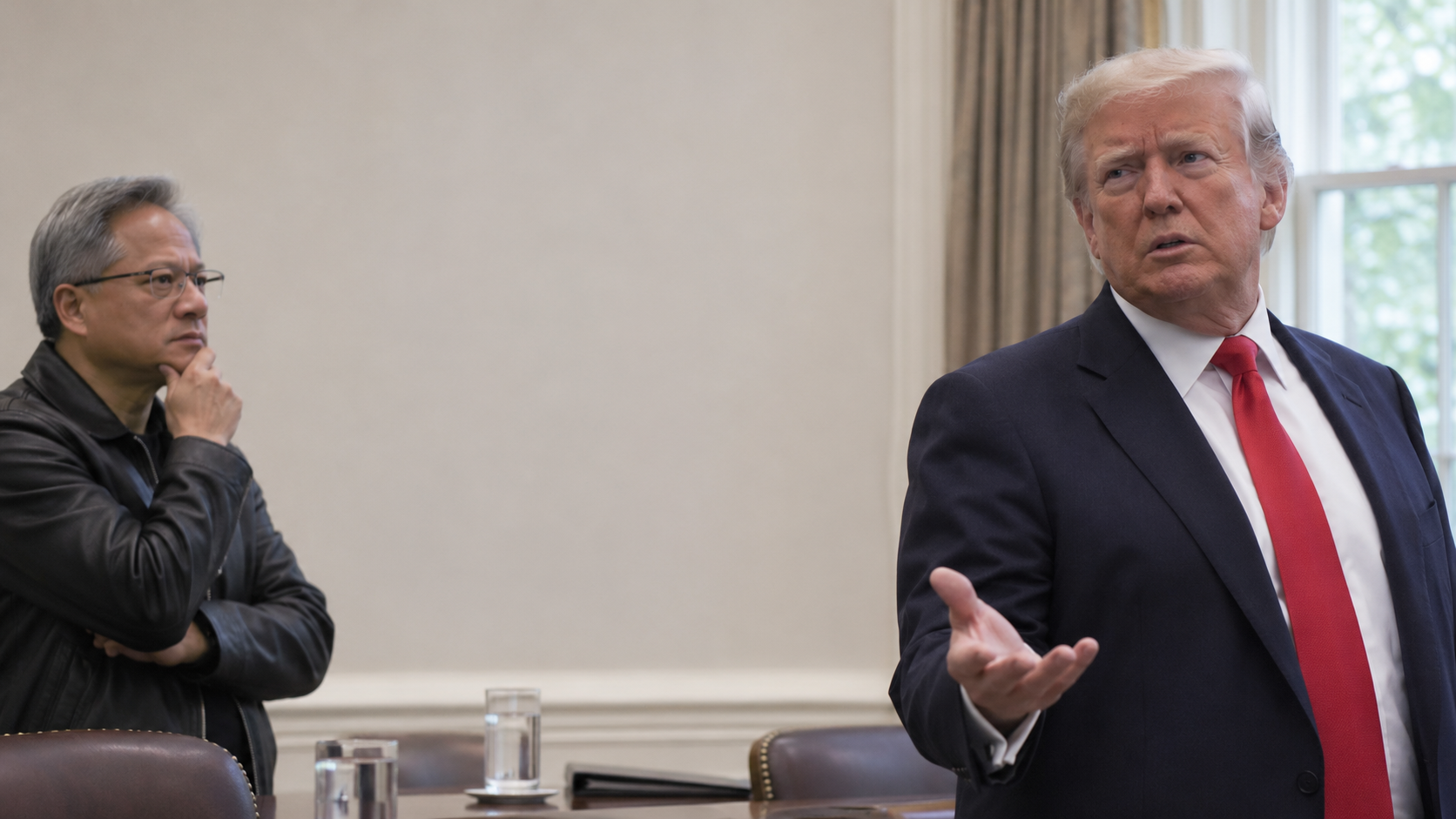
Fortune reported that Trump said he persuaded Nvidia’s board to reinstate or restore Jensen Huang. The claim remains attributed to Trump. The available source summary does not include independent confirmation from Nvidia’s board, a transcript of the alleged discussions or a detailed explanation of Huang’s formal status before his reported return. Source 3
The distinction matters because appointing or removing a public company’s CEO normally belongs to its board of directors. Directors are expected to evaluate executive performance, protect the company’s interests and make leadership decisions through an independent process.
A president may influence a company through regulation, public statements, national-security policy or direct engagement with executives. That influence is not the same as formal legal authority to appoint or remove a private company’s CEO. The available reports do not show that Trump possessed such authority over Nvidia.
Nvidia’s strategic importance makes the issue especially sensitive. Its graphics processing units and AI systems support data centers, advanced computing and other strategically important applications. US restrictions on advanced chips also place Nvidia at the center of broader technology competition between the United States and China.
Political leaders therefore have strong reasons to engage with Nvidia. Strategic importance, however, does not eliminate the need for independent oversight. It makes that oversight more important.
Why Presidential Involvement Matters
If a president publicly claims to have influenced a board’s decision about a specific CEO, investors may question whether the board acted independently and whether political considerations affected the leadership process.
Potential consequences include:
- Lower confidence in the board’s independence.
- Greater uncertainty about executive accountability.
- Concern that companies with stronger political access receive different treatment.
- Pressure on other corporate boards to respond to presidential demands.
- Confusion about where government policy ends and private governance begins.
These concerns do not establish wrongdoing. They identify the governance questions that follow when political intervention is alleged.
Nvidia’s board could reduce uncertainty by explaining the formal leadership timeline, confirming whether Huang’s position changed and describing the process used to reach its decision. It would not need to disclose confidential conversations or sensitive personnel information, but it would need to demonstrate that directors followed a defensible process.
Why Huang’s Congressional Appearance Matters
The reported congressional appearance gives lawmakers an opportunity to examine Nvidia’s relationship with the administration and its role in the AI economy. The available source summaries do not provide a transcript, a list of questions or specific testimony from Huang. Source 1
Lawmakers may focus on several areas.
Nvidia’s relationship with the Trump administration
Congress could ask whether Trump or administration officials contacted Nvidia executives or directors about Huang’s position. It could also examine whether Nvidia requested government assistance, received policy concessions or participated in discussions about its leadership.
The central issue would be process. Did the board make its decision independently? Were political contacts documented? Did Nvidia’s legal and compliance teams review them? Did government officials make requests, or did the company voluntarily seek political support?
Export controls and national security
Nvidia’s chips are central to debates about advanced computing and national security. Export controls can restrict the sale of high-performance processors to certain countries, particularly China. Such rules affect Nvidia’s revenue, product design and relationships with major customers.
Congress may question Huang about how Nvidia balances commercial interests with national-security requirements. Lawmakers may also examine whether the company’s government relations influence its position on export restrictions.
Corporate governance and succession
The leadership controversy gives Congress another reason to examine Nvidia’s internal controls. Lawmakers could ask whether the board had a formal plan for an unexpected CEO absence, whether an interim leader was designated and how authority was distributed during the 11-day period.
They could also ask how the board would manage a permanent transition if Huang became unable to lead the company. A founder’s influence can strengthen a company’s identity while creating dependence on one person. Nvidia’s governance systems must address both realities.
The reported ballroom contribution
Congress could seek information about Nvidia’s reported $25 million contribution to Trump’s ballroom project. Questions may include who approved the payment, which entity received it, how Nvidia classified it and whether it complied with company policy.
The available summaries do not establish whether the payment was cash, a pledge or another form of support. They also do not identify the recipient entity, payment date or conditions. Those details require confirmation from the original reporting and relevant corporate disclosures.
Nvidia’s Reported $25 Million Contribution
Fortune reportedly said Nvidia contributed $25 million to Trump’s ballroom project. The source summary describes the payment but does not provide its precise legal or accounting classification. Source 1
The contribution attracted attention because it appeared alongside Trump’s reported claim that he helped restore Huang. Timing can create a perception of influence, but it does not prove an exchange of favors.
Three questions must remain separate:
- Did Nvidia make a $25 million contribution?
- Did Trump influence Nvidia’s leadership decision?
- Were the contribution and the leadership decision connected?
The available source summaries report the first point and attribute the second to Trump. They do not establish the third.
Why the contribution creates a perception problem
Large corporate contributions to projects associated with a sitting president can create reputational risk even when lawful. Investors, employees and regulators may ask whether the company received political access or expected favorable treatment.
The concern becomes more pronounced when the same president discusses the company’s leadership. The combination can create the appearance that corporate money and executive decisions are part of the same political relationship.
An appearance is not proof of misconduct. Nvidia would need to show that the contribution followed standard procedures and was evaluated independently of any discussion about Huang’s position.
Governance controls for a major contribution
A contribution of this size would normally prompt questions about internal controls, including:
- Whether the board or a board committee approved it.
- Which corporate policy authorized the payment.
- Whether Nvidia’s legal and compliance teams reviewed it.
- How the company recorded it in its accounts.
- Whether shareholders received appropriate disclosure.
- Whether executives identified potential conflicts of interest.
- Whether the payment involved conditions, benefits or political commitments.
The legal classification also matters. A charitable donation, sponsorship, political contribution, project pledge or corporate payment can carry different disclosure and compliance requirements. The final characterization should come from Nvidia’s records or a verified original report, not assumptions.
Huang’s 11-Day Absence and Succession Planning
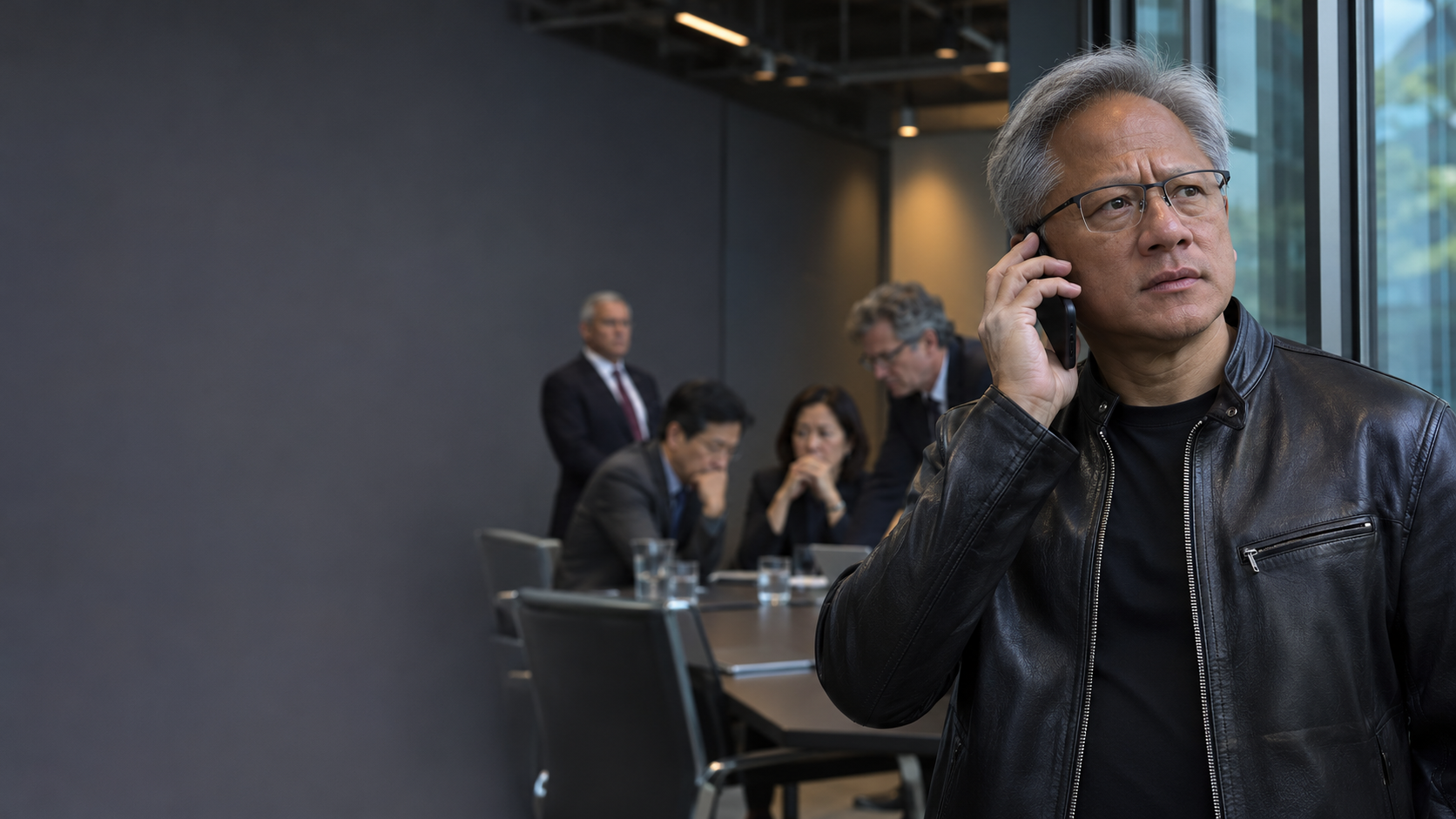
Fortune reported that Huang’s 11-day absence exposed weaknesses in Nvidia’s succession planning. The source summary does not establish why he was absent, whether he was formally removed or whether Nvidia experienced an operational disruption. Source 7
The governance issue is not necessarily the length of the absence. It is whether Nvidia had a clearly communicated process for maintaining leadership continuity.
Nvidia depends heavily on Huang’s technical vision, public communication and relationships with customers, investors and government officials. His profile is closely linked with the company’s strategy and public identity.
That concentration can create several risks:
- A leadership vacuum during an emergency.
- Confusion about decision-making authority.
- Delays in major strategic decisions.
- Employee and customer uncertainty.
- Greater sensitivity to political pressure.
- Increased volatility if investors doubt the transition plan.
A strong succession plan does not require a company to announce every possible successor. It should establish a process that works during an unexpected absence and a permanent transition. Important elements include:
- A board-approved emergency leadership protocol.
- A named interim CEO or clearly defined appointment process.
- Delegated authority for operations, government affairs and investor relations.
- Communication procedures for employees, customers and investors.
- A pipeline of qualified internal candidates.
- Regular reviews conducted before a crisis.
- A plan for transferring technical, commercial and political relationships.
If Huang’s absence raised doubts about Nvidia’s preparation, the board should explain how it is strengthening that process.
Trump’s Broader Involvement in Corporate Decisions
Fortune presented Nvidia as part of a broader pattern in which Trump has involved himself in corporate matters. The available summary does not provide enough verified detail to assess other cases individually, but it identifies the wider political context. Source 3
Presidential involvement can have legitimate policy motivations. A president may seek to protect domestic employment, encourage investment, support strategic industries or advance national-security goals. Direct contact with corporate leaders can also speed coordination during a crisis.
The risks are substantial. Public pressure may blur the boundary between government authority and private decision-making. Companies with access to the president may gain advantages over competitors. Boards may feel pressure to prioritize political expectations over shareholder interests.
The central governance principle remains board independence. Political leaders can communicate priorities and enforce applicable laws. Corporate directors must still evaluate CEO appointments, contributions and strategic decisions through an independent process.
Nvidia, China and Pressure on Technology Executives
Nvidia’s strategic importance extends beyond Washington. The company operates within a difficult international environment shaped by US export controls, Chinese market access and national-security concerns.
Executives face competing pressures:
- The United States seeks to limit access to certain advanced technologies.
- Customers want powerful and affordable computing products.
- Nvidia has commercial interests in international markets.
- China may respond to restrictions through regulation or market pressure.
- Investors expect management to protect long-term growth.
Business adviser Ram Charan has warned CEOs not to assume they are safe from China-related regulatory or geopolitical pressure. That warning appears in broader business coverage and should not be treated as a specific allegation about Nvidia or Huang. Source 9
Huang occupies a difficult dual position. He is responsible to Nvidia’s shareholders, employees and customers, but he also leads a company whose products have national-security implications. That makes him both a corporate executive and a prominent participant in policy debates.
This dual role can create tension between commercial priorities and government expectations. Congress may therefore examine not only what Huang says about Nvidia’s business, but also how the company makes decisions when public policy and shareholder interests diverge.
What the Episode Reveals About Corporate Governance
Nvidia’s board must be able to explain how it handles leadership decisions, political contacts and major corporate contributions. Directors should be prepared to answer:
- Why was Huang retained, restored or otherwise confirmed?
- What happened during his reported absence?
- Who held decision-making authority?
- How does the company manage government relationships?
- What review process governed the reported contribution?
- How does Nvidia prepare for a permanent leadership transition?
The board’s credibility depends on the process behind the decision, not only on the outcome.
Founder-led companies benefit from continuity, a strong culture and a recognizable strategic vision. They also become vulnerable when one executive controls critical relationships and decisions. At Nvidia, Huang’s reported responsibilities encompass technical direction, product strategy, investor communication, government relations, public representation and long-term corporate positioning.
A succession plan must preserve those capabilities without assuming that one successor can simply replicate the founder’s role. Nvidia may need a structured leadership model that distributes responsibilities across executives and board committees.
Investors may seek information about the 11-day absence, the board’s response to Trump’s statement, the contribution’s approval process and the company’s government-relations policies. Disclosure should clarify material facts without exposing confidential board discussions.
What Remains Unclear
The available source summaries leave several important questions unanswered:
- Did Trump directly contact Nvidia’s board?
- Did the board change a formal decision because of Trump?
- What was Huang’s exact status before his reported restoration?
- Why was Huang absent for 11 days?
- Did Nvidia formally confirm the $25 million contribution?
- Which entity received the contribution?
- Was it a donation, pledge, sponsorship or another payment?
- Did Congress ask Huang about the contribution?
- Did lawmakers receive documents about the leadership decision?
- Has any regulator opened an inquiry?
Those gaps limit what can responsibly be concluded. The evidence supports a governance story and a public-accountability debate. Based on the supplied material, it does not establish corruption, an improper arrangement or a quid pro quo.
Conclusion: A Leadership Story Becomes a Governance Test
Jensen Huang’s reported appearance before Congress comes amid three overlapping issues: Trump’s claim that he helped restore Huang at Nvidia, the company’s reported $25 million contribution to Trump’s ballroom project and concerns about succession planning after Huang’s 11-day absence.
None of these facts alone proves improper conduct. Trump’s statement requires independent verification. The contribution requires details about its recipient, purpose and approval process. The succession concerns require Nvidia to explain how leadership continuity works during an unexpected absence.
Together, however, the issues create a significant corporate-governance test. Nvidia must demonstrate that its board can make leadership decisions independently, that its political and charitable contributions follow defensible procedures and that the company can operate effectively without relying entirely on one executive.
The central unresolved question is whether Nvidia can show that its leadership decisions and political contributions followed transparent, independent and accountable processes.
FAQ
Did Trump restore Jensen Huang as Nvidia CEO?
Trump reportedly said he persuaded Nvidia’s board to reinstate or restore Huang. The available source summaries do not independently verify the claim or explain the formal status of Huang’s position.
How much did Nvidia reportedly contribute to Trump’s ballroom project?
Fortune reportedly said Nvidia contributed $25 million. The available summary does not identify the recipient, payment structure, approval process or precise legal classification.
Why did Jensen Huang face Congress?
His reported appearance may involve Nvidia’s strategic importance, AI policy, export controls, corporate governance and alleged political intervention in his leadership. The supplied summaries do not include a transcript or detailed list of questions.
What did Huang’s 11-day absence reveal about Nvidia?
Fortune reported that the absence exposed weaknesses in Nvidia’s succession planning. The company appeared not to have demonstrated a clear temporary or permanent leadership process.
Does the contribution prove a political exchange?
No. The available sources report the contribution and Trump’s claim about Huang separately. They do not establish a quid pro quo. Timing may raise questions, but evidence is required before reaching that conclusion.
Why is Nvidia’s succession planning important?
Nvidia relies heavily on Huang’s technical vision, public profile and government relationships. A credible succession plan would help the company maintain stability during an unexpected absence or eventual leadership transition.
Related Articles
-
 Black Friday Sales Rose Despite Affordability Concerns
-
 GoodRx Settlement Claim Deadline: How to File
-
 Questions Over Trump’s Role in Nvidia Reinstatement
-
 Why American Companies Are Pulling Back From China
-
 What the Debate Over Aschenbrenner’s Letter Reveals
-
 Warnings Behind This Week’s Stock-Market Rally
-
 December 2025 Social Security Payment Schedule
-
 Airport Travel Advice: Prepare for Delays and Disruptions
-
 US Shoppers Spent Billions While Seeking Black Friday Deals
-
 United Fidelity Bank Closed: What Customers Should Know
-
 WLFI Token Plunges More Than 50% Overnight
-
 Jensen Huang Return to Nvidia: What the Reports Claim
-
 Why Black Friday Shoppers Still Spend Big on Tech
-
 United Fidelity Bank Seizure: What Customers Should Know
-
 DWP Cyber Attack Takes Pension and Benefits Systems Offline
-
 Nvidia Blackwell Hardware Reported at China Data Center