Thanksgiving Storms Disrupt Travel and Macy’s Parade
Thanksgiving Storms Disrupt Holiday Travel and Macy’s Parade Plans
Powerful storms disrupted Thanksgiving travel across the United States, bringing strong winds, heavy rain, flooding, and snow to a wide area. The severe weather created dangerous driving conditions, complicated airport operations, and caused hundreds of flight cancellations during one of the busiest travel periods of the year.
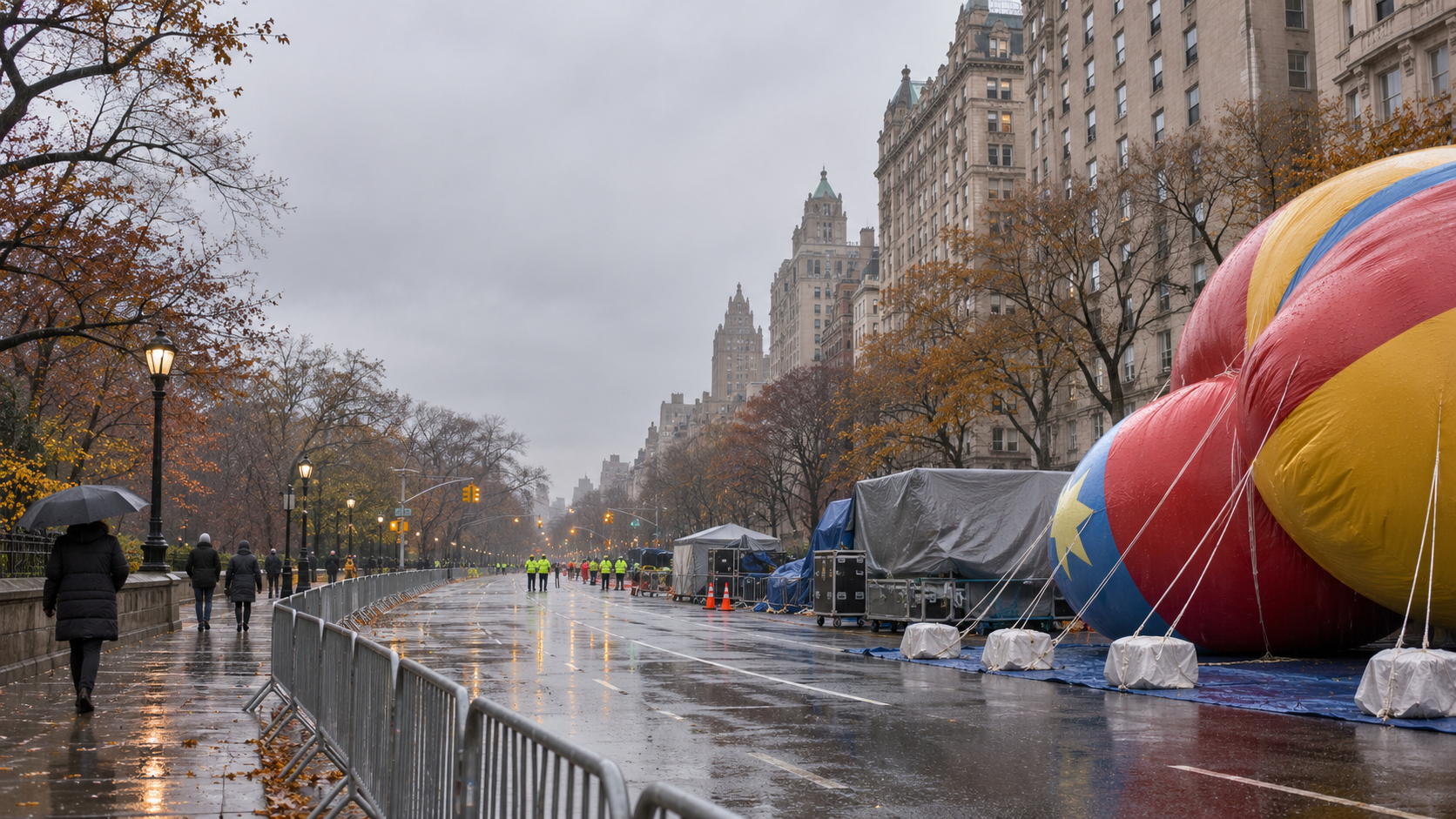
The storm also affected preparations for the Macy’s Thanksgiving Day Parade in New York City. NPR’s supplied summary described the parade as postponed, while Bloomberg’s summary reported delays. Because “postponed,” “delayed,” and “canceled” have different meanings, travelers and spectators should confirm the final status through official Macy’s, NBC, New York City, and emergency-management updates. Source 1
Weather-related disruptions can spread beyond the areas receiving the heaviest precipitation. Delays can move through national airline networks, while road, rail, and bus interruptions may continue after local conditions improve. Forecasts also raised concerns that some locations could receive as much as 14 inches of snow. Source 9
More Than 250 Million People Face Storm Threats
FOX Weather reported that Thanksgiving storms were targeting more than 250 million people. The estimate refers to the population within areas facing storm-related hazards; it does not mean that everyone experienced damage, evacuation, or a canceled trip. Source 3
The main hazards included:
- Strong wind gusts
- Heavy rainfall
- Flash and urban flooding
- Snow and mixed precipitation
- Reduced visibility
- Dangerous road surfaces
- Airport and public-transportation delays
A storm does not need to produce severe conditions everywhere to create nationwide travel problems. Travelers may begin in calm weather but connect through an airport, highway corridor, or rail route affected by wind, flooding, or snow.
East Coast Travel Faces Particular Pressure
The storm affected parts of the U.S. East Coast, placing major population centers and transportation hubs under pressure. The region contains some of the country’s busiest airports, highways, rail corridors, bridges, tunnels, and transit systems.
New York City and surrounding areas received particular attention because the storm coincided with the Macy’s Thanksgiving Day Parade and heavy holiday travel. Bloomberg’s supplied summary said the storm caused delays to Macy’s 100th Thanksgiving Day Parade. Source 7
Conditions can change quickly. Travelers should use current National Weather Service alerts, local emergency-management notices, transportation advisories, and airport updates instead of relying on a general regional forecast.
Hundreds of Flights Canceled
The BBC reported hundreds of weather-related flight cancellations during the Thanksgiving travel period, along with significant delays across the United States. Source 5
Weather can disrupt flights through strong crosswinds, low visibility, rain, snow, icy surfaces, runway treatment, air-traffic restrictions, and displaced aircraft or crews. Travelers should distinguish among these statuses:
- Delayed: The flight remains scheduled but departs or arrives later.
- Canceled: The airline removes the flight from its operating schedule.
- Diverted: The aircraft lands at an airport other than its planned destination.
A delayed flight may still operate, while a canceled flight requires rebooking. A diverted flight may require ground transportation, a new connection, or an overnight stay.
What to Do After a Cancellation
- Check the airline’s application and website for automatic rebooking.
- Look for a weather waiver that allows free changes.
- Compare replacement flights before accepting an itinerary.
- Consider nearby airports if transportation is practical.
- Confirm the replacement reservation before leaving the airport.
- Save receipts and review the airline’s policy for eligible expenses.
- Keep medication, identification, chargers, and valuables in carry-on luggage.
Airports outside the storm’s core can also experience delays because aircraft and crews move through multiple cities. Passengers with multi-leg itineraries should check every segment rather than assuming that only the first flight matters.
Macy’s Thanksgiving Day Parade Schedule Remains Unclear
The storm’s effect on the Macy’s Thanksgiving Day Parade became a major part of the holiday travel story. NPR’s supplied summary reported a postponement, while Bloomberg’s summary described delays. Source 1 Source 7
Organizers must evaluate the safety of spectators, performers, balloon handlers, workers, emergency responders, and nearby residents. Strong winds can threaten balloons, temporary equipment, signs, and other structures. Heavy rain can reduce visibility and make streets slippery, while flooding can affect access routes, staging areas, and emergency response.
Visitors should confirm the event status shortly before leaving and check subway, bus, road, and street-closure information. They should dress for wet, cold, and windy conditions and prepare an alternative transportation plan.
Snow, Flooding, and High Winds Create Additional Risks
Newsweek reported that a Thanksgiving snowfall map showed snow across parts of the United States, with some locations potentially receiving up to 14 inches. Source 9
Forecast totals vary over short distances because of elevation, storm track, temperature, and the timing of rain-to-snow changes. Travelers should check updated National Weather Service forecasts, winter-weather advisories, and local road reports.
Snow can affect roads, bridges, runways, rail lines, bus routes, and emergency services. Strong winds may reduce visibility and cause drifting. Wet snow can weigh down branches and power lines, while freezing temperatures can create ice after precipitation ends.
Heavy rain can overwhelm drainage systems and cause street flooding, highway closures, water rescues, and public-transportation interruptions. A flood watch means conditions could produce flooding; a flood warning means flooding is occurring or imminent. Drivers should never enter flooded roads because water can conceal debris, washed-out pavement, or dangerous currents.
High winds can cause turbulence, ground delays, airport restrictions, fallen trees, power outages, and bridge or tunnel limitations. Drivers should monitor wind advisories and avoid exposed routes when officials recommend doing so.
Practical Advice for Thanksgiving Travelers
Air Passengers
Check flight status before leaving home. Download airline and airport applications, keep documents and medication in carry-on luggage, and prepare for long security and customer-service lines. If a flight is canceled, compare automatic rebooking with other available itineraries and ask about weather waivers or nearby airports.
Drivers
Check state transportation websites and local alerts. Fill the fuel tank or charge the vehicle, carry water, food, blankets, a flashlight, a first-aid kit, and a charged phone. Avoid flooded roads, blizzard conditions, and routes under official closure. If visibility or traction deteriorates, stop in a safe location.
Train and Bus Passengers
Confirm departure times before leaving for the station. Monitor operator alerts for cancellations, route changes, and replacement services. Crowded stations and limited alternatives can make last-minute changes difficult.
Parade Visitors
Confirm the parade status through official sources. Check public-transit advisories and street-closure notices, dress for rain and wind, and avoid restricted viewing areas. Prepare for a delay, postponement, route change, or cancellation.
What to Check Before Leaving Home
Travelers should review:
- National Weather Service forecasts and warnings
- State and local emergency-management alerts
- Flood, wind, and winter-weather advisories
- Official road-condition websites
- Airline, rail, and bus alerts
- Airport departure and arrival boards
- Public-transportation notices
- Hotel cancellation and change policies
- Official parade announcements
Travelers who may need an overnight stay should confirm hotel availability before leaving the airport or station. They should save booking numbers, rebooking confirmations, and customer-service correspondence.
Delays May Continue After Conditions Improve
Travel networks need time to recover after weather improves. Airports may need to inspect runways, reposition aircraft, restore crew schedules, and clear baggage backlogs. Road crews may prioritize emergency routes and major highways before secondary roads. Transit agencies may restore service in stages.
Local sunshine does not guarantee that a flight, train, bus, or highway route is operating normally. Travelers should confirm service before heading to an airport or station.
Key Takeaways
- Thanksgiving storms disrupted travel across a large part of the United States.
- FOX Weather reported that more than 250 million people were in areas facing storm-related threats.
- Strong winds, heavy rain, flooding, and snow created hazardous conditions.
- The BBC reported hundreds of flight cancellations and significant delays.
- NPR and Bloomberg reported changes to the Macy’s Thanksgiving Day Parade schedule, but official event and city sources should provide the final status.
- Newsweek reported that some areas could potentially receive up to 14 inches of snow.
- Travelers should check weather warnings, transportation updates, and official event notices before leaving home.
- Flooded roads, blizzard conditions, and official travel restrictions require travelers to delay or avoid unnecessary trips.
FAQ
Was the Macy’s Thanksgiving Day Parade postponed?
The supplied reports described an affected schedule. NPR’s summary reported a postponement, while Bloomberg’s summary reported delays. Travelers should confirm the final status through official Macy’s, NBC, New York City, and emergency-management updates.
How many people were affected by the storm?
FOX Weather reported that more than 250 million people were in areas facing storm-related threats. The estimate does not represent the number of people who experienced damage, cancellations, or direct disruption.
Were Thanksgiving flights canceled because of the weather?
Yes. The BBC reported hundreds of cancellations during the Thanksgiving travel period, along with significant delays. Passengers should check their airline’s latest status and rebooking policies.
Where was snow expected?
Newsweek reported that parts of the United States could receive snow, with some areas potentially recording up to 14 inches. Forecast totals can change as the storm track and temperatures develop.
What should travelers do if a flight is canceled?
Check the airline application and website, look for a weather waiver, compare replacement flights, and consider alternate airports if practical. Confirm the new itinerary before leaving the airport and retain receipts for eligible expenses.
Is it safe to drive during the storm?
Safety depends on local conditions and official warnings. Travelers should avoid flooded roads, blizzard conditions, and routes under emergency restrictions. Check road reports and local alerts before departure.
Related Articles
-
 US Warns EU Over Proposed Big Tech Tax
-
 Two Italians Reported Killed in Iranian Strike in Kuwait
-
 Could Immigration Bring Spain’s Far Right to Power?
-
 Congo Ebola Outbreak Reaches 12,000 Reported Cases
-
 Heavy Rain, Wind and Flooding Hit US at Thanksgiving
-
 ICE Arrests Boston Man Days After $1 Million Lottery Win
-
 NYC Rent Freeze Upheld in Win for Mamdani
-
 Egypt Highway Fire Kills at Least 31 Near Cairo
-
 China and U.S. Partners Resist Trump Tariff Plans
-
 Ukraine Says Five Jets Damaged at Savasleyka Airbase
-
 UK Net Migration Falls to Lowest Level Since 1997
-
 Trump Criticizes Iowa Governor-Elect Sand Over Lead Blast
-
 Six Killed in Mississippi Coast Plane Crash Near Horn Island
-
 Judge Declines Long-Term Ban on Pro-Trump Ads
-
 Macy’s Thanksgiving Parade Postponed for the First Time
-
 Trump Tariffs Could Restore Pre-Supreme Court Rates